News
Recap of the WWDC and Google IO what it means for fintech and metchants
Apple Pay: WWDC25
WWDC 2025 focused on embedding payments deeper into the core operating system and giving merchants more control over the user experience. The updates redefine what the Wallet app handles.
1. The Dynamic Apple Pay Button
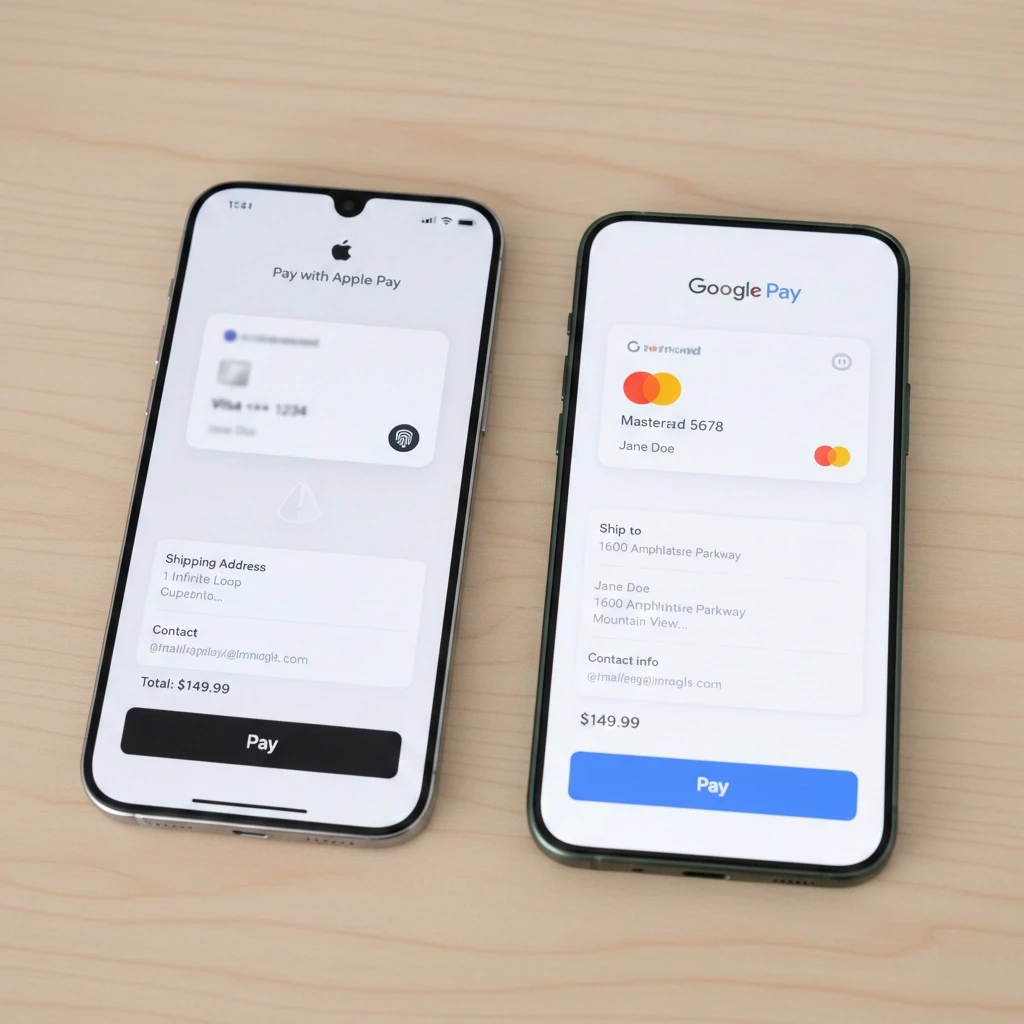
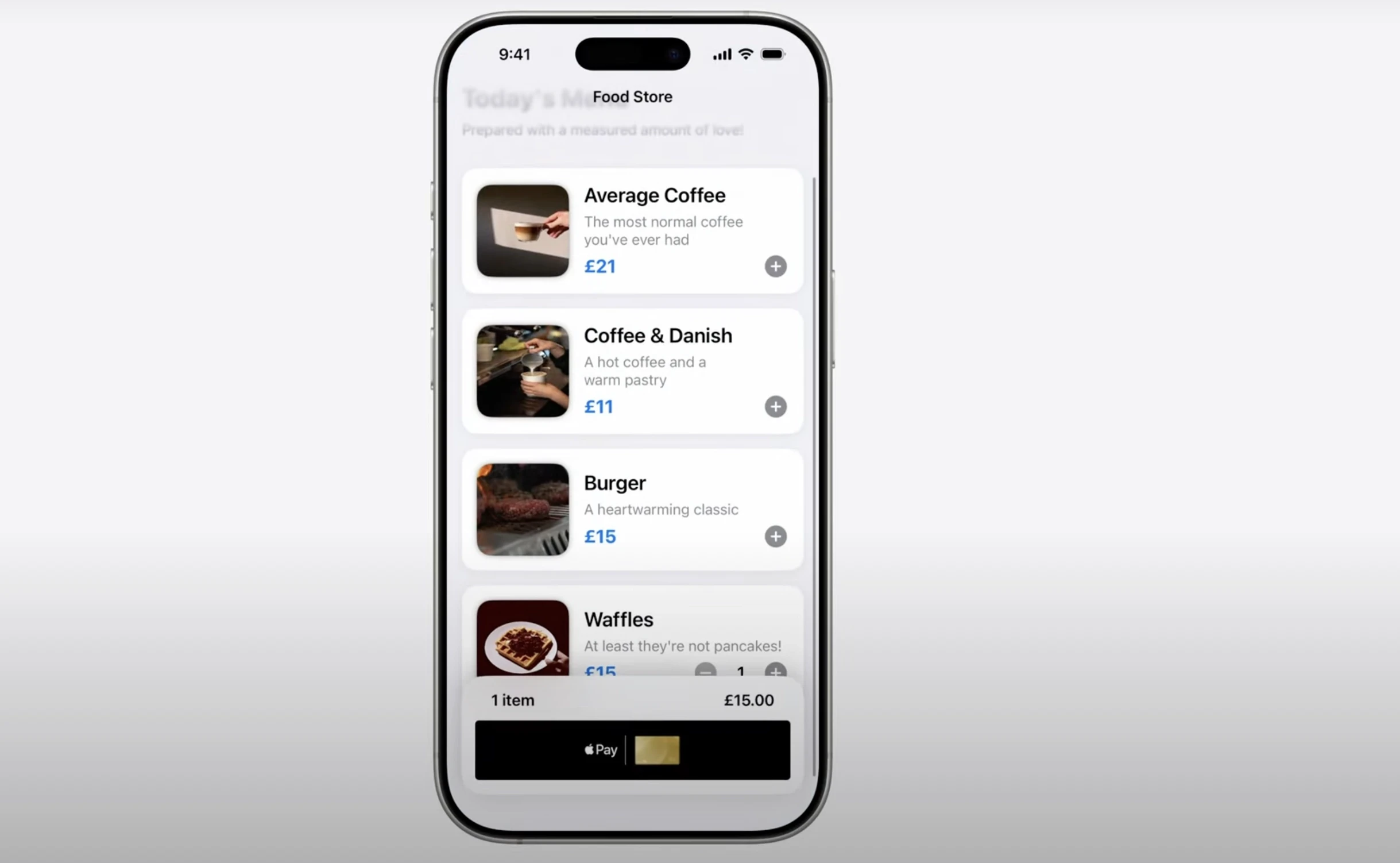
The payment button is no longer static. It now displays the user's default card visual directly.
The Change: The system uses Merchant Category Codes to select the optimal card for the transaction automatically. If the primary card fails, the system presents the next suitable option.
Value for Merchants: This removes payment friction at the moment of truth. Automatic card selection based on transaction type means fewer declined payments and a faster path to conversion.
2. Merchant & Pre-Authorisation Control
Apple enhanced the tools for merchants running subscription or recurring payment models.
Pre-authorised Payments: Users now have a clear, consolidated management section for all recurring charges (subscriptions, installments) within the Wallet. They can revoke authorization directly from this view.
Merchant Branding: Merchants can now use rich branding, custom icons, and detailed product imagery in payment descriptions. This is centralized through Apple Business Connect registration, ensuring consistent branding across Maps, Mail, and Wallet.
Value for Merchants: Enhanced branding builds trust and reduces customer support queries about recurring charges. Centralized management reduces payment failure rates from expired or revoked authorizations.
3. Order Tracking and Email Optimisation
Wallet is using on-device intelligence to connect post-purchase data.
Automatic Order Tracking: The system automatically reads order details from email confirmations and converts them into trackable entries in the Wallet. This tracking is done on the device, maintaining user privacy.
Value for Merchants: This streamlines the post-purchase experience with minimal development overhead. Merchants must now optimize their order emails to include clear naming and tracking information for best results.
4. FinanceKit Updates
The API suite for financial applications expanded to allow background processing of user financial data.
Background Delivery Extension: Financial apps can now access real-time account balances and transaction data and process it outside of the main app lifecycle. This requires user consent, and all processing remains on the device.
Value for Fintech: This capability enables real-time spending analysis and automated budgeting notifications without requiring the user to open the app. It makes sophisticated financial management tools possible.
Google pay: Google IO'25
Google’s I/O announcements centered on empowering merchants to fight fraud, improving recurring payment support, and giving the payment button more flexibility.
1. Revamped Google Pay Button and Customisation
Google enhanced the visual flexibility and data presentation of its payment button and sheets.
Customisation: The
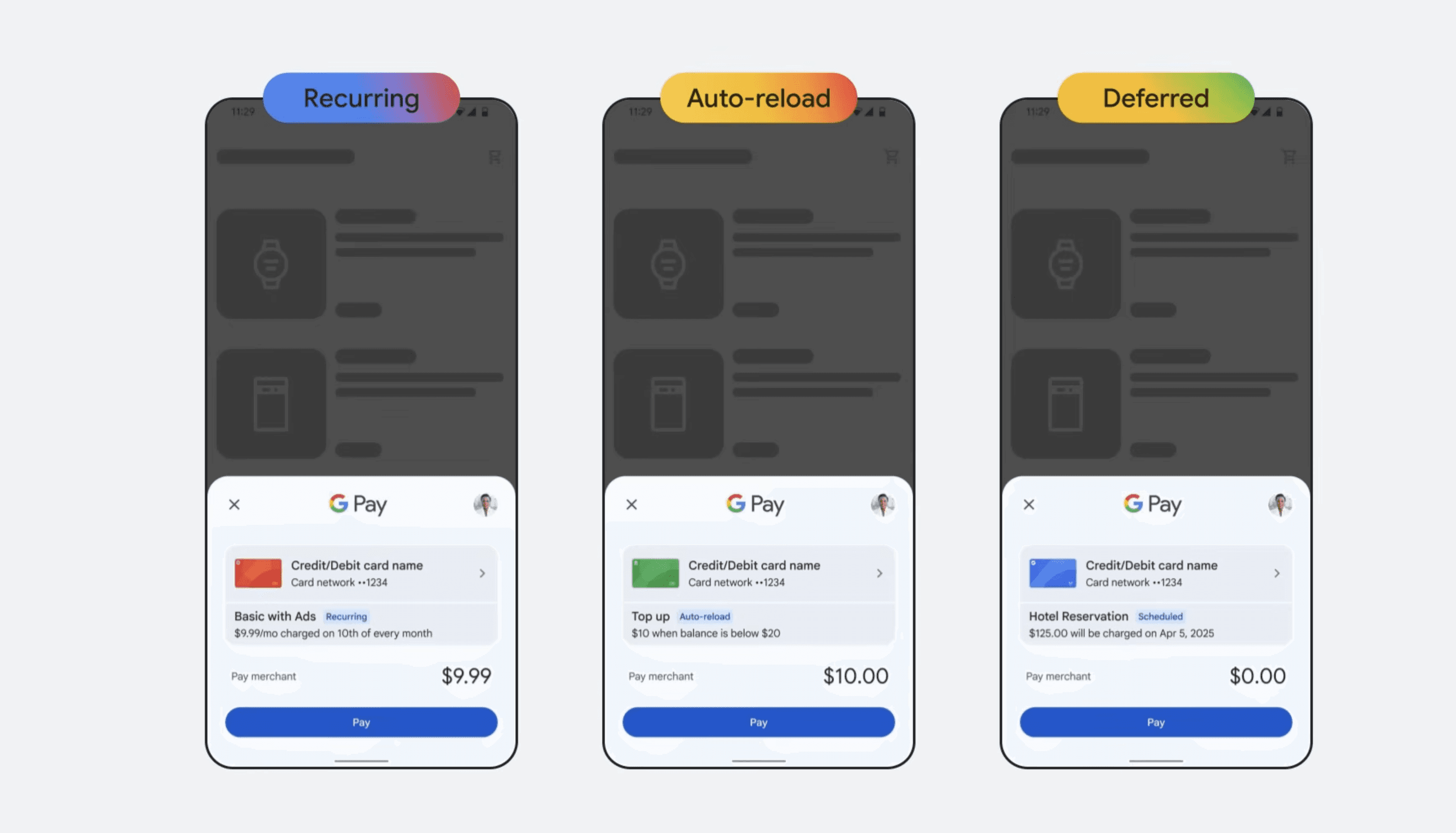
createButtonAPI for Web now offers more customisation options, including control over borders and more button text options to better match merchant UI. The payment sheet itself now supports rich card art and names, helping users select their preferred card faster.Value for Merchants: Increased visual harmony on the checkout page reduces user hesitation. Richer card details in the payment sheet drive conversion by reinforcing trust and card choice.
2. Streamlined Recurring and Deferred Payments
Google is making it easier for merchants to manage subscription and delayed payments.
Payment Continuity: New features include device-independent tokens for payment continuity, meaning the payment method remains valid even if the user switches devices. The system also provides lifecycle notifications for underlying card changes (e.g., expiry).
Value for Merchants: This directly addresses involuntary churn caused by expired or lost cards. Card lifecycle notifications give merchants the necessary lead time to prompt users for updates, securing recurring revenue.
3. Fraud Prevention and Chargeback Data
Google Pay is moving to a more collaborative model for fighting fraud.
Chargeback Data Contribution: Merchants can now contribute to Google's fraud detection models by uploading chargeback data via the Google Pay & Wallet Console.
Built-in ID Verification: Google Pay can automatically trigger identity verification for suspicious transactions without any code changes from the developer.
Value for Merchants: By sharing anonymized chargeback data, merchants help refine the security models that protect all Google Pay transactions, leading to smarter fraud detection and lower overall fraud risk. Built-in ID verification reduces manual effort in risk management.
4. Google Wallet Updates
The Wallet app itself is becoming a more useful contextual tool.
Nearby Passes Notifications: Wallet is rolling out location-based notifications for saved passes, like loyalty cards or boarding passes. The relevant pass appears automatically based on proximity to a venue.
Value for Users: This removes the need to manually open the app and search for passes in a physical environment, reducing friction in store checkouts and travel.
Our takeaway
Both Apple and Google are pushing payments from a transactional step to an ambient, intelligent utility that runs in the background.
For Merchants: The focus is on retention and conversion. Apple gives control over subscriptions and post-purchase experience. Google offers better fraud tooling and reduces churn on recurring payments. Wallets are now necessary. Your architecture must be ready to integrate with and leverage these dynamic, intelligent features.
For Developers: The tools are becoming more sophisticated. From FinanceKit enabling new financial app categories to Google's fraud console integration, platform compliance and data exchange are now central to building a successful payment flow.
Related Articles